
It was a Monday like any other, until it wasn't.
A piece of equipment on the line failed. Production stopped. The plant manager made the call no plant manager wants to make: shut down the entire shift.
A team of engineers assembled, pulled maintenance records, reviewed change notes, and combed through mountains of historical data, looking for the thread that would explain a full shift of lost output.
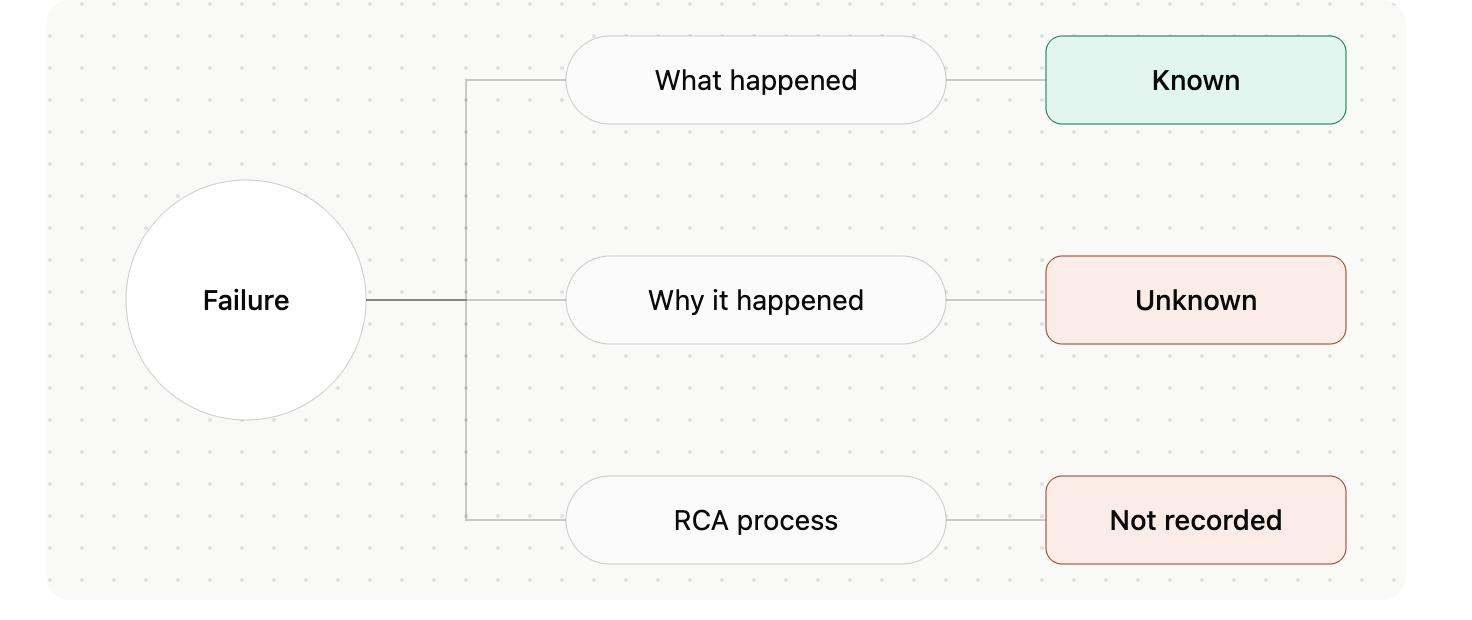
By the end of the week, they had an answer to one question and not the other. They knew what had happened. They still didn't know why.
So they did what every team in that position does: implemented a fix based on their best technical judgment, and moved on, knowing the probability of recurrence would only be as low as the quality of the investigation behind it. And that investigation, for all the hours poured into it, hadn't found a root cause. It had found plausible assumptions.
This isn't a story about one plant. It's a gap in almost every manufacturing operation today, between how much data a plant captures and how much of it a team can turn into a decision.
The same gap, a different shape
A few months later, a plant quality manager described a quieter version of the same problem: no alarms, no lost shift, just a long list of non-conformance findings, quietly accumulating from product testing and inspection.
The problem wasn't a lack of data. It was that the data couldn't be prioritized or acted on with confidence. With limited workforce capacity, the team needed to know which findings were worth chasing. Two things stood in the way: the findings weren't linked to customer claims, so there was no way to know which non-conformances were costing the business in warranty spend and which were cosmetic; and the findings were described inconsistently, the same failure, observed by three operators, becoming three different write-ups.
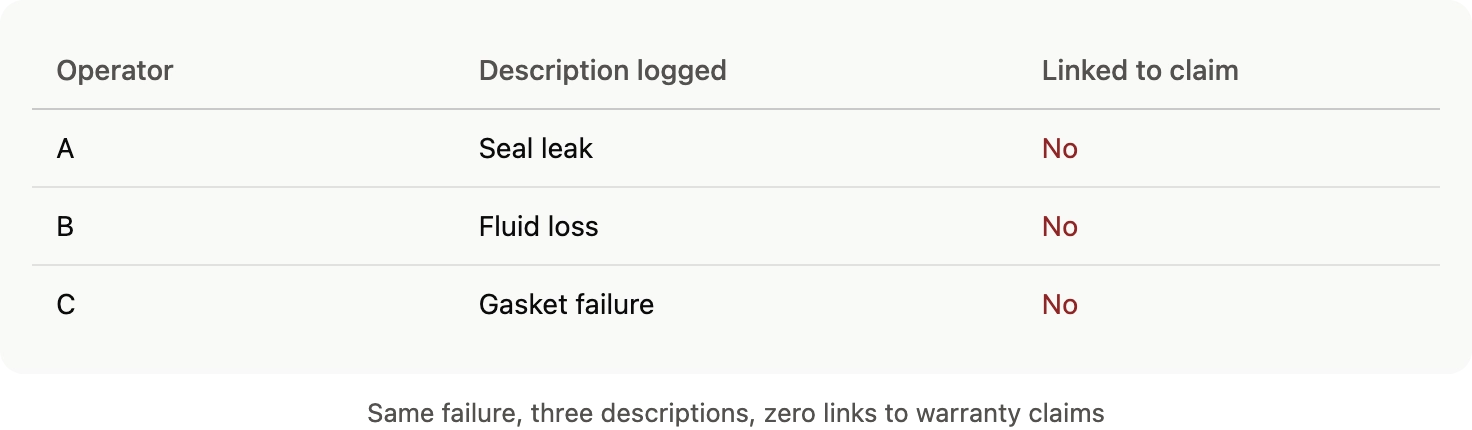
Two plants. Two different symptoms, one explosive, one slow-burning. The same underlying disease.
"More data" was never the answer
It's worth sitting with why these stories keep recurring. The instinctive response, we need more data, is almost always wrong. These teams weren't data-poor. By their own account, they were good at capturing it. The plant manager said as much directly: the data exists, in volume. What's missing is something else.
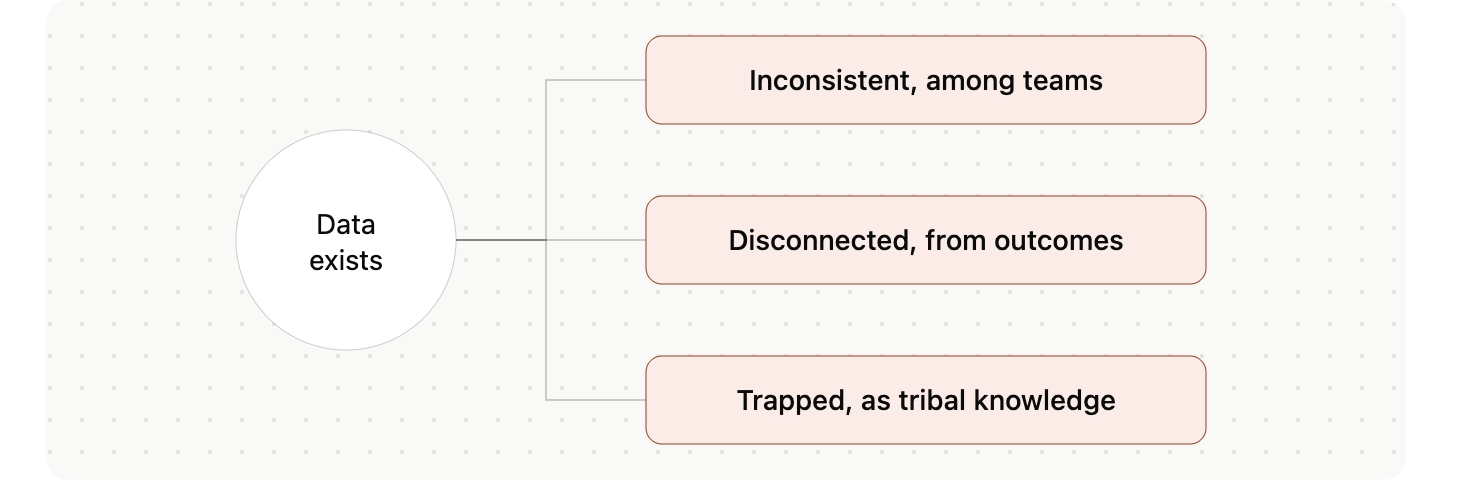
Three things are going on, and they compound: data is inconsistent by design, since five people describing the same failure five ways isn't one signal, it's five unsearchable fragments; data is disconnected from outcomes, since a non-conformance finding and the warranty claim it's driving live in two systems that never talk; and context lives with the engineer, not the database: the hunch, the thing ruled out, the fix that almost worked, none of it makes the record. That knowledge has a shelf life as long as the engineer's tenure.
A team can be drowning in data and still unable to tell a clear story about its own factory floor — not because the information isn't there, but because no single view connects it.
A way to think about the gap: Data, Insights, Agents
Once you see this pattern across enough plants, a structure emerges, not a tool, but a way of thinking about where a team sits on the road from reactive to predictive.
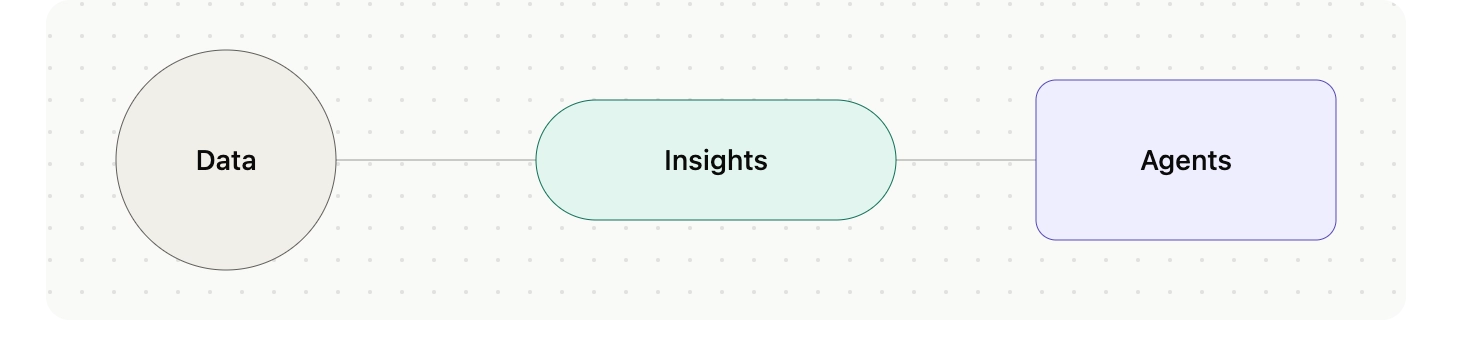
Stage One — Data
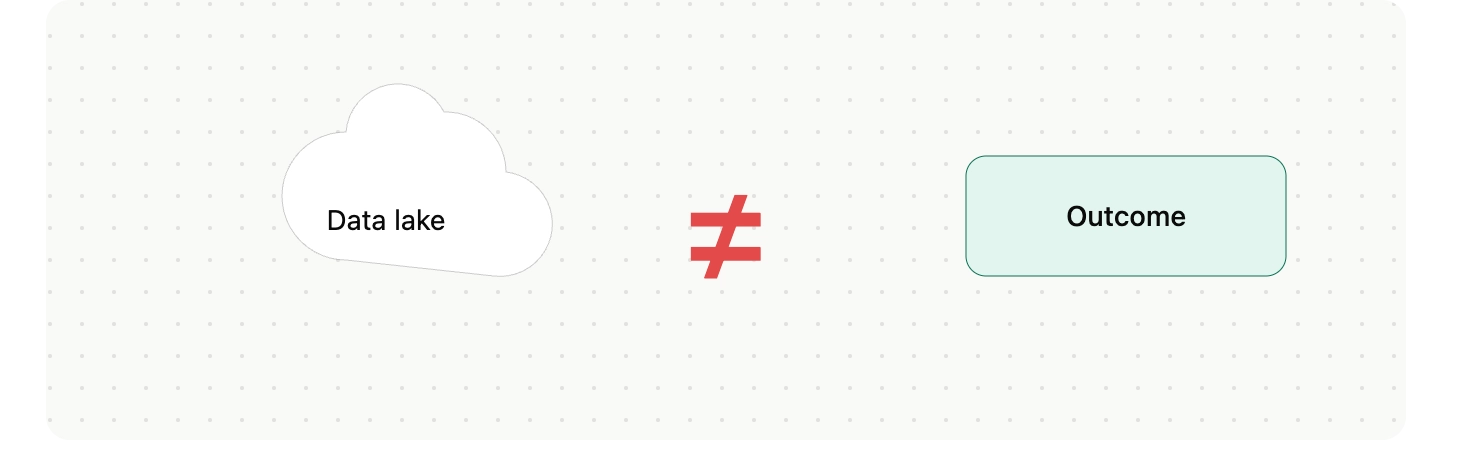
This is where most plants already are, and it's further than it looks. Data is captured: sensor readings, inspection logs, technician notes, often in large volumes. The limitation isn't volume. It's that the data is scattered, inconsistently described, and disconnected from the outcomes (field failures, warranty claims) that show which of it actually matters.
Stage Two — Insights
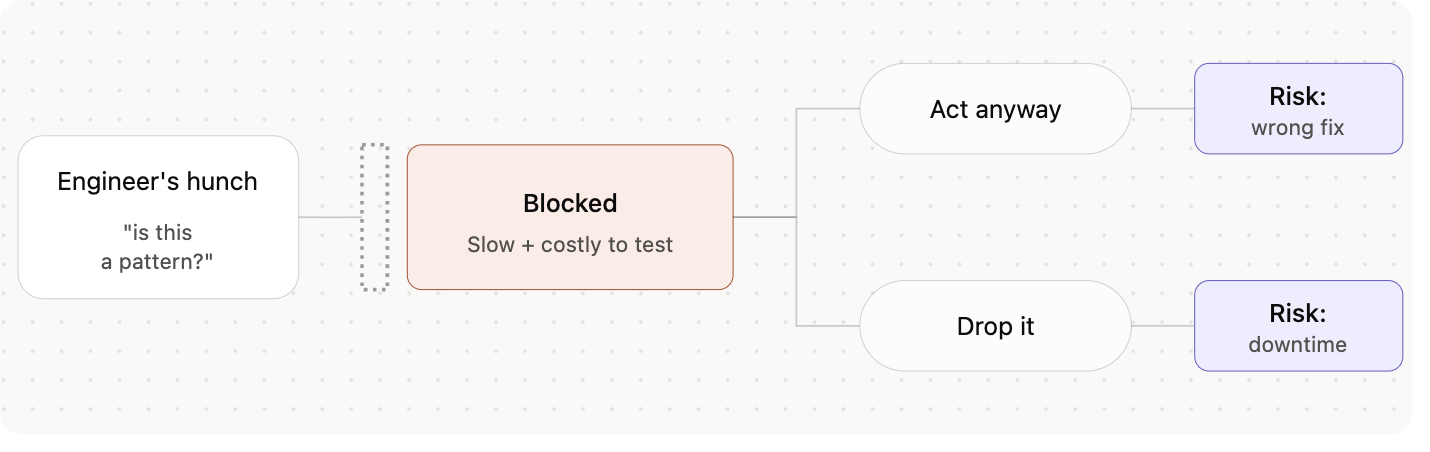
Most teams get stuck here, for two reasons easy to mistake for each other. The first is a throughput problem, not a skills problem: engineers know how to find what they're looking for, they just don't have the hours. The second is a validation problem. A team senses a trend, or that two issues share a cause, but has no fast way to test that hunch against real data. Acting on it risks the wrong fix. Dropping it risks letting a real pattern recur, possibly catastrophically, the way it did that Monday.
Stage Three — Agents
This is what makes the first two durable. An insight that lives in one engineer's head, or a slide deck no one reopens, isn't a capability. It's a moment. Making it last means automating the workflow that found it, giving teams a fast way to test assumptions, codifying what worked into a repeatable action, and eventually letting engineering teams build and adapt their own workflows as new patterns emerge.
The cost of staying stuck
None of this is abstract. Both stories cost real money on plants doing everything right: capturing data, staffing engineers, running investigations. What's missing isn't effort. It's an intelligence layer connecting what's been captured to what a team can act on with confidence.
What it takes to close the gap
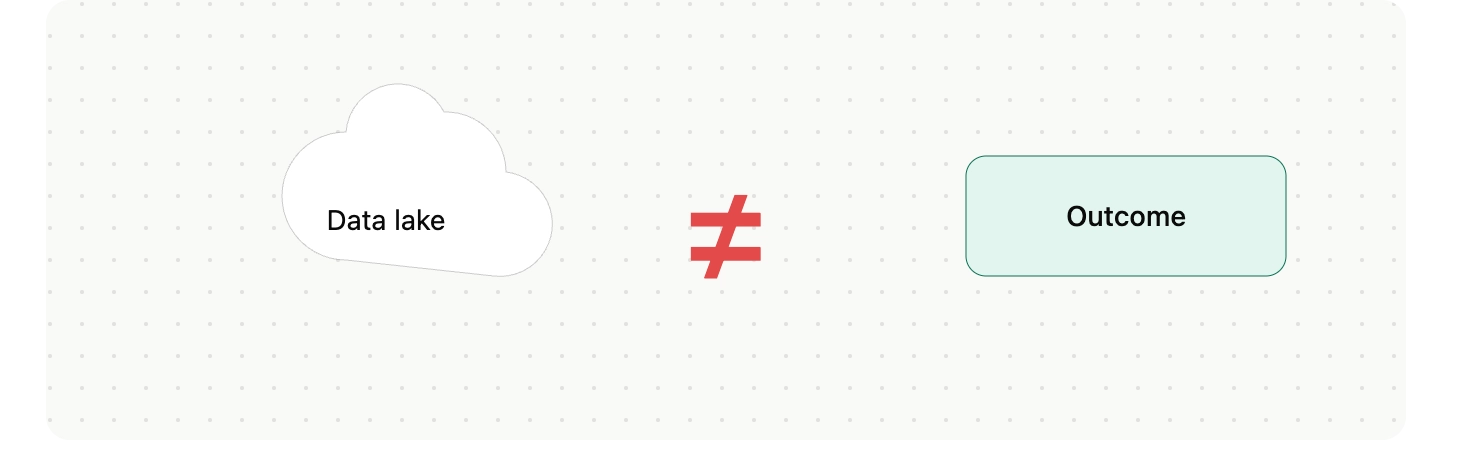
The fix isn't more data. It's a way to make the data that already exists trustworthy, connected, and fast enough to act on. That means data captured consistently enough to compare across operators and plants, linked automatically to the outcomes it's actually driving, and usable for teams to abstract insight and test a hunch in minutes instead of weeks.
That's the layer we'll look at next: how to close the gaps in the data itself, turn unstructured engineering language into searchable insight, give teams a fast way to test their own assumptions, and automate the workflows that make a good catch repeatable.
The plants that figure this out first won't just react faster. They'll stop having to guess.
Related posts

Hello, Telemetry Agent
Run diagnostics, across fleets, in minutes
Tabbird AI Agents can now link and analyze telemetry data from connected factories, equipment, and vehicles — so engineers can test a hunch against the whole fleet in minutes, not weeks.
July 8th, 2026

Ending the Prioritization Debate
Are We Fixing the Right Thing?
Prioritization isn't a ranked backlog you sort once — it happens at every technical decision point. Here's how connecting unstructured field claims with fleet telemetry replaces “past experience” with ground truth.
August 28th, 2026